






The glitz of the Super Cup, the tech blackout, and love on the battlefield
The 2026 Brazilian football season didn't just start on the right foot; it started with both feet in the chest of those who expected a calm and relaxing January. Under the scorching heat preceding Carnival, the country witnessed the birth of a new competitive era, where the Brazilian Série A Championship now shares the spotlight with cup finals right at the turn of the calendar. For the man who appreciates the sacred combination of cold beer, sharp banter, and the spectacle of the pitch, the current scenario is a feast, overflowing with goals, refereeing controversies that would make even the calmest of monks lose their patience, and, of course, that extra spice from the gossip columns that show us that the lives of the stars off the field are as eventful as a Botafogo counter-attack.
In this edition of our column, we delve into the inner workings of the spectacle that paralyzed Brasília last Sunday and analyze how the "financial abyss" between clubs seems to have taken a day off to allow tactical competence and spirit to prevail. Football, this theater of emotions that defies purely Cartesian logic, proved once again that numbers on the balance sheet don't score goals, although they are quite helpful when it comes to hiring the next number 10. Between luxurious weddings being planned and breakups that stir up social media, the Brazilian player continues to be this mythical figure: a hero in football boots who, at times, gets lost in the excesses of his own private "banter."
The Black and White Reign in Brasília: Corinthians is the King of the 2026 Super Cup
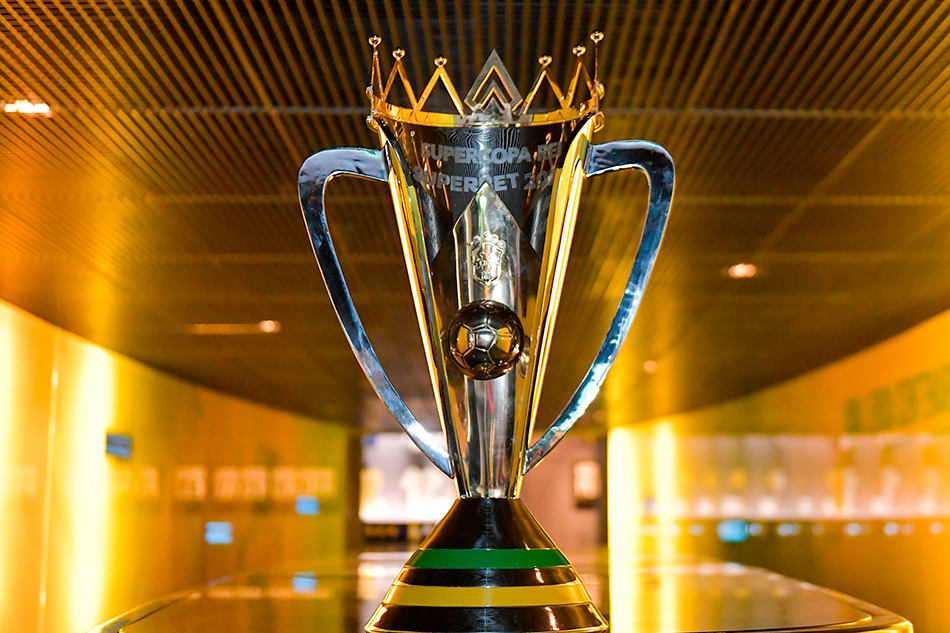
The Mané Garrincha Stadium in Brasília witnessed on Sunday, February 1st, 2026, a chapter that will be remembered as the victory of planning over ostentation. Corinthians, facing a Flamengo team that many consider a European "super team" lost in the tropics, not only won 2-0, but also conquered the Supercopa Rei title for the second time, repeating the historic feat of 1991 against the same opponent. For those who enjoy a good irony of fate, Timão proved that, even immersed in internal political turmoil that would make any condominium management seem like paradise, on the field the team found an enviable unity.
The match was a feast for tactical analysts and a test of endurance for Flamengo fans. The first goal, in the 25th minute of the first half, was a classic example of how set pieces can be the best friend of those who know what they're doing and the worst nightmare of those who are asleep at the wheel. Gabriel Paulista, in a run that caught the Flamengo defense still arguing about fuel prices, finished with precision after a clever deflection by Gustavo Henrique. Flamengo, with all its hypnotic ball possession, seemed like that guy who spends hours at the gym but doesn't know where to put his hands when the fight starts; they dominated the midfield, exchanged passes with Arrascaeta and De La Cruz, but ran into a very well-organized black-and-white wall.
The coup de grâce came in stoppage time of the final stage, when the Rio de Janeiro fans were already starting to look for exits from the arena. Yuri Alberto, the striker who has a love-hate relationship with the fans—more love than hate lately, it must be said—rushed forward, left goalkeeper Rossi looking like he'd missed the bus, and with a touch of extreme skill, sealed the fate of the trophy. The celebration was a portrait of relief: Corinthians is King, and Flamengo, despite its billion-dollar investment, returns to Rio de Janeiro with baggage full of doubts and a hint of regret for not having focused more on training than on end-of-year celebrations.
The Anatomy of Chaos: VAR, the Blackout, and the Late Red Card
If the game was decided by fouls, the controversy was fueled by a power outage. The expulsion of Colombian midfielder Jorge Carrascal, from Flamengo, is the kind of event that makes us question whether we are in 2026 or in an episode of "The Twilight Zone". The incident occurred at the end of the first half, when Carrascal struck Breno Bidon in the face with his arm in a violent manner. The problem wasn't the foul itself, which the cameras showed to be clear, but rather the timing of the justice system.
The teams went to the locker room with the score at 1-0, expecting a second half of pressure from Flamengo. However, in a move that left coach Filipe Luís on the verge of a nervous breakdown, referee Rafael Klein returned from halftime and, even before restarting the match, went to the VAR monitor and showed a red card to the Flamengo midfielder. The CBF's justification, issued in an official statement a few hours later, attempted to downplay an absurd situation: they claimed that the initial images were inconclusive and that a new angle was only made available during halftime.
As if the late intervention wasn't enough to guarantee Monday's review, technology decided to play another trick. For about 20 minutes of the second half, the VAR room in Brasília suffered a power outage, leaving the refereeing trio "in the dark." Just imagine: a national final, with more than 71,000 people cheering, broadcast to millions, and those responsible for upholding the rules of the game depending on luck because the power grid decided to doze off. This raises a profound discussion about the infrastructure of our stadiums and whether we are truly prepared for the promised "semi-automatic offside," if we can't even guarantee basic lighting during peak times.
The Transfer Market: The Chess Game of Millions and Triumphant Returns
While the ball rolls and technology fails, the boards are working in a market that seems to have no ceiling. Flamengo, trying to cure the hangover from finishing second, is betting everything on the arrival of Lucas Paquetá. The negotiation, which involves figures capable of supporting a small nation, is seen as the "game-changer" for the season. Paquetá's presence in Rio de Janeiro is already sending shivers down the spines of rivals, with commentators pointing out that the midfielder brings a quality worthy of the Brazilian national team that can unbalance any championship. It's the old maxim: if you can't win with what you have, buy the best on the market.
However, it's not all celebration for the giants. Palmeiras, in a move that caught many fans by surprise, is about to lose Raphael Veiga. The midfielder, the brains of Abel Ferreira's team, is finalizing his transfer to Mexican football after years of service and many trophies in the trophy cabinet. Veiga's departure represents the end of an era at Allianz Parque and puts the Portuguese coach at a tactical crossroads: how to replace the irreplaceable with the Brazilian Championship already underway?
Back at Vila Belmiro, the atmosphere is one of nostalgia and hope. Gabigol's return to Santos in 2026 is one of those scripts that cinema wouldn't dare to write. The striker, who became an idol and then a villain (and hero again) at Flamengo, returns home with the mission of returning Santos to the top of Brazilian football. Rumors—and reliable sources—say that Neymar played a fundamental role in this negotiation, acting almost as an informal sporting director to unite Santos' glorious past with its current need.
Pickup games, parties, and backstabbing: The dark side of Rio de Janeiro football.
Don't be fooled, dear reader: football doesn't end when the referee blows the whistle. In Rio de Janeiro, the third stage of the game is played in luxury mansions and party houses in Alto da Boa Vista. The recent controversy involving Gonzalo Plata and Jorge Carrascal is the preferred topic in sports gossip circles. The Ecuadorian striker Plata organized a private celebration attended by about 70 women, along with only himself and two close friends. The event, described as "strictly private" and with cell phones strictly prohibited, ended up becoming a police matter when patrol cars arrived to contain the noise in the early hours of the morning.
What really stands out, however, is the rift in the Flamengo squad. Rumors indicate that there was a "talaricagem" — that technical term for when someone decides to advance on a teammate's territory — between Plata and Carrascal involving a female guest from previous parties. The result? The two, who were once "brothers" at parties, now barely look at each other in the locker room, dividing the group between those who prefer the Colombian's banter and those who follow the Ecuadorian. It's proof that a team without discipline off the field ends up losing its way on it, especially when vanity speaks louder than passing.
Love is in the air (and on social media).
In the realm of relationships, 2026 promises to be the year of royal weddings in football. Neymar Jr. and Bruna Biancardi seem to have finally found peace after a sea of controversies, betrayals, and public reconciliations. The couple is planning a grand wedding, with high-profile godparents like Gabigol, sealing a union that is now described as stable and family-focused. For Neymar, emotional stability may be the fuel he needs for his last great performance in the upcoming World Cup.
On the other hand, "Karolino" has come to an end. Defender Léo Pereira and influencer Karoline Lima announced their breakup in a turbulent manner, including the deletion of photos and rumors that the romantic atmosphere had given way to a digital ego battle. Meanwhile, Vini Jr., the Real Madrid star, saw his name involved in leaked conversations with Brazilian influencers, including Virgínia Fonseca, showing that even the best in the world have difficulty maintaining absolute secrecy in times of screenshots and WhatsApp groups.
|
Couple / Athlete |
Relationship Status |
Important Detail |
|---|---|---|
|
Neymar & Bruna Biancardi |
Engaged / Planning a Wedding |
Stability after the "yo-yo" phase |
|
Léo Pereira & Karoline Lima |
Finished |
Announcement on January 27, 2026 |
|
Gabigol & Rafaella Santos |
Reunited / Engaged? |
Living together in BH / Returning to Santos |
|
Vini Jr & Virgínia Fonseca |
Rumors of Affair / Breakup |
Leaked messages and autographed shirts |
Round Analysis: The Brazilian Série A and the Irony of Fate
The 2026 Brazilian Championship started with the force of a hurricane, and the results of the opening round (focusing on the most recent games allowed by our 4-day timer) show that nobody will have an easy time.
-
Mirassol 2 x 1 Vasco (January 29th): Vasco decided to test the hearts of its fans right from the start. Playing in the interior of São Paulo, the Giant of the Hill seemed to confuse the pitch with a catwalk, such was its passivity against a Mirassol team that played as if it were a World Cup final. Losing to Mirassol isn't a sin, but making the fans travel across the state to see this lack of accuracy is almost a crime against the nation.
-
Botafogo 4 x 0 Cruzeiro (January 29th): Glorioso (Botafogo) entered the field with the hunger of someone who hasn't eaten in three years. Cruzeiro, under Tite's command, tried to apply that famous "balance," but ended up unbalanced by an overwhelming Botafogo. Four to zero is a scoreline that sends a message to the league: "Forget last year, now things are serious." Cruzeiro, on the other hand, will need a lot of talking and perhaps a little more aggression if they don't want to spend the entire championship looking at the bottom of the table.
-
The World Cup Break: It's important to note that, although the games have just started, there will be a break in May for the World Cup. This means that the 2026 Brasileirão will be the longest in history, lasting 309 days. It's a marathon for the strong, where physical preparation and squad depth will be more important than ever.
Economic Perspective: Financial Fair Play and Football's Billion Dollar
Brazilian football is experiencing a fascinating paradox in 2026. While the accumulated debts of the clubs reach the staggering mark of R$ 15 billion, the brand value of the 30 main teams has risen by 15%, reaching R$ 47.4 billion. This is the moment when the sport ceases to be merely a passion and becomes a highly complex business, demanding the rigorous implementation of Financial Fair Play to prevent the "abyss" between those with money (Flamengo, Palmeiras, Bahia/City) and those struggling to pay the electricity bill from becoming insurmountable.
The Brazilian Football Confederation (CBF) also announced financial sustainability measures aimed at controlling expenses and reducing club debt. For fans, this may mean more expensive tickets, but also the guarantee that their team won't disappear due to mismanagement. Brazilian football is becoming professionalized by force, and 2026 will be the laboratory for this new world order of football.
Author : Emerson Gonçalves
Posted in: 02/02/2026
Last modified: 10/20/2026
0 comments